
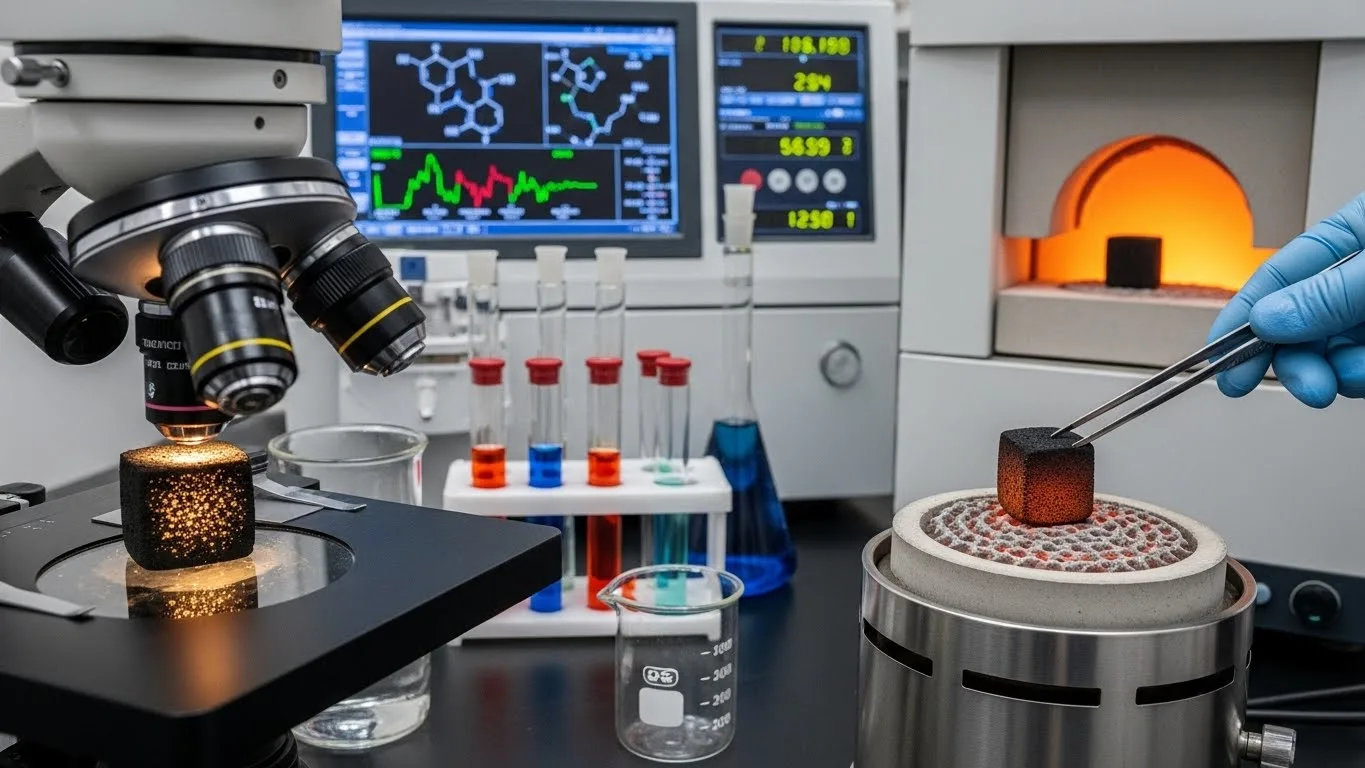
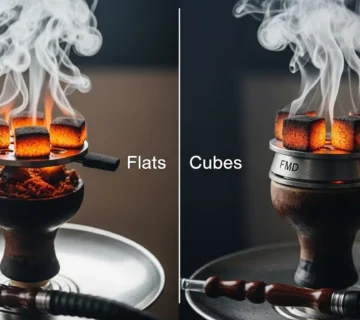
Coconut hookah charcoal (also called coconut shell coal) is made by carbonizing coconut shells. It’s often marketed as a renewable, chemical-free alternative to quick-light or wood charcoals. Consumers frequently ask whether this “natural shisha coal” is safer. In fact, hookah smoking is widespread worldwide, and studies show its harmful effects can match or exceed cigarette smoking. Much of the toxicity comes from the burning coal. In this article, we compare coconut-shell coals with quick-light and wood-based coals, examining their composition, burn emissions (like carbon monoxide and heavy metals), and perceived safety. For example, Coco Java Natural Coconut Hookah Charcoal Flats and Cubes are 100% coconut-shell coals that illustrate this natural option.
Composition and Chemicals
Coconut charcoal: These coals come from carbonized coconut shells – essentially pure, solid carbon with no added chemicals. They burn hot and clean without artificial binders. By contrast, quick-light charcoals are factory-made briquettes. They typically contain compressed charcoal dust mixed with ignition additives (sulfur, potassium nitrate, petroleum products) and sometimes metal oxides. A scientific analysis notes quick-light coals “contain powdered coal, various metal oxides and organic matter dry-pressed into a briquette” for easy lighting, whereas natural coals (hardwood or coconut) are simply lump pieces of carbonized wood or shell. In other words, coconut coals have zero added accelerants, while quick-light briquettes are infused with them. Wood lump charcoals (like hardwood coals) are also natural and additive-free; they are made from chunks of hardwood (e.g. beech, mango) burned into charcoal.
Even natural charcoals can contain impurities. All coals may hold trace heavy metals from their source material. A 2016 study found raw hookah charcoals (both synthetic and natural) contained metals like lead, cadmium, chromium, zinc and more, at concentrations similar to or even higher than cigarettes. Coconut shells can absorb minerals from the fruit, and wood can absorb soil metals, so both coconut and wood coals can contain these elements. Any heavy metals in the coal can be released into the smoke or ash when burned.
Emissions and Health Risks
Burning any charcoal produces toxic emissions. Coconut, quick-light and wood coals all yield carbon monoxide (CO), as well as carcinogenic compounds. In fact, tests show charcoal is the main source of CO and PAHs in hookah smoke. One laboratory comparison found roughly 90% of CO in waterpipe smoke comes from the burning coal (not the tobacco). Likewise, 75–95% of several toxic PAHs (polycyclic aromatic hydrocarbons) – including benzo[a]pyrene – originated in the charcoal. In practical terms, coconut charcoal will still produce a lot of CO. The difference is that quick-light briquettes produce much more CO than natural coconut or wood lumps. For example, a controlled experiment measured CO output from both types: over 90 minutes the quick-light coal averaged about 3,728 ppm CO, compared to 1,730 ppm from a natural (coconut/wood) coal. In other words, the quick-light coal produced over twice as much CO as the natural coal under the same conditions . (dukespace.lib.duke.edu)
Other pollutants follow a similar pattern. Burning any charcoal emits PAHs, volatile organic compounds (VOCs), and fine particulates. One review noted that charcoal combustion was responsible for the vast majority of carcinogens in hookah smoke (over 95% of benzo[a]pyrene came from the coal) researchgate.net . Quick-light additives add their own toxins: common accelerants like potassium nitrate and petroleum derivatives release additional poisons (sulfur dioxide, benzene, etc.) when burned. By contrast, coconut shell coals have no additives, so they mainly emit combustion products of carbon (CO₂, CO, ash, plus the usual PAHs). However, even pure coconut coal combustion yields some VOCs and soot byproducts. In short, all charcoal-burning releases CO, PAHs, and toxic metals, but quick-light briquettes amplify these by adding chemicals.
Carbon Monoxide (CO): Nearly all CO in hookah smoke comes from the coal. Quick-light coals emit far more CO than coconut coals.
Carcinogenic PAHs: Coconut and wood coals produce PAHs (like benzo[a]pyrene) as charcoal burns. Studies show ~90% of high-molecular PAHs in smoke are from coal.
Heavy Metals: Charcoal smoke can carry lead, cadmium, chromium, etc., from the coal itself. Concentrations in charcoal ash can be as high as cigarettes.
Chemical Additives: Quick-light briquettes release extra toxins (sulfur compounds, nitrogen oxides, benzene) from their accelerants. Coconut coals have none of these additives.
Comparison Table
| Feature | Coconut Charcoal | Quick-Light Charcoal | Wood Charcoal (Natural) |
|---|---|---|---|
| Source Material | 100% carbonized coconut shells (no additives) | Compressed charcoal dust + ignition chemicals (sulfur, nitrate, etc.) | Hardwood chunks (carbonized wood); natural binder or no binder |
| Ignition Method | Requires external heat (charcoal chimney or lighter) to reach glowing ember | Self-ignites with a flame or gas due to built-in accelerants (lights in seconds) | Similar to coconut: needs flame/charcoal starter kit, no additives |
| Flavor/Odor Impact | Burns with a clean, almost odorless flame (no chemical taste) | Often gives off a chemical smell or “quick-light” taste from additives | Can impart a mild wood/earthy aroma; more soot than coconut, but no added odor |
| Emissions | Produces CO, ash, PAHs and trace metals (like any coal) | Highest CO output; releases all of the above plus combustion products of its chemicals (soot, SO₂, VOCs) | Emits CO and PAHs at rates similar to coconut; may have more particulates and natural wood aromatics |
| Safety (Perception) | Marketed as “natural” and cleaner (no chemicals); still generates CO and carcinogens from burning carbon | Considered least safe: highest CO exposureand added toxic fumes from chemicals | Traditional choice; no additives, but can burn unevenly and still produce CO/PAHs like any coal |
Conclusion
No hookah coal is entirely “safe” – burning charcoal always produces carbon monoxide, PAHs and other toxins. That said, coconut-shell coals offer some advantages. Because they contain no chemical accelerants, coconut coals burn hotter and cleaner than quick-light briquettes, yielding much less CO and almost no extra chemical fumes. Quick-light coals generate significantly more CO (over twice as much in one study), so using coconut coals does reduce one major hazard. However, coconut coals are still carbon-based fuel. Research shows that roughly 90% of hookah CO and carcinogenic PAHs come from the burning coal itself. In other words, a glowing coconut coal still emits dangerous gases. Studies have even found trace heavy metals (lead, cadmium, chromium, etc.) in pure coconut coals at levels comparable to cigarettes.
Practical takeaway: Choose good-quality, natural coconut-shell coals (like Coco Java’s products) for cleaner heat, but always smoke responsibly. Use them in a well-ventilated space or with a charcoal chimney to avoid CO buildup. Remember that “natural” coals eliminate added chemicals but do not eliminate the basic risks of charcoal combustion. Mindful hookah use – limiting session time and ensuring fresh air – is the best way to reduce harm, regardless of charcoal type.

No comment