
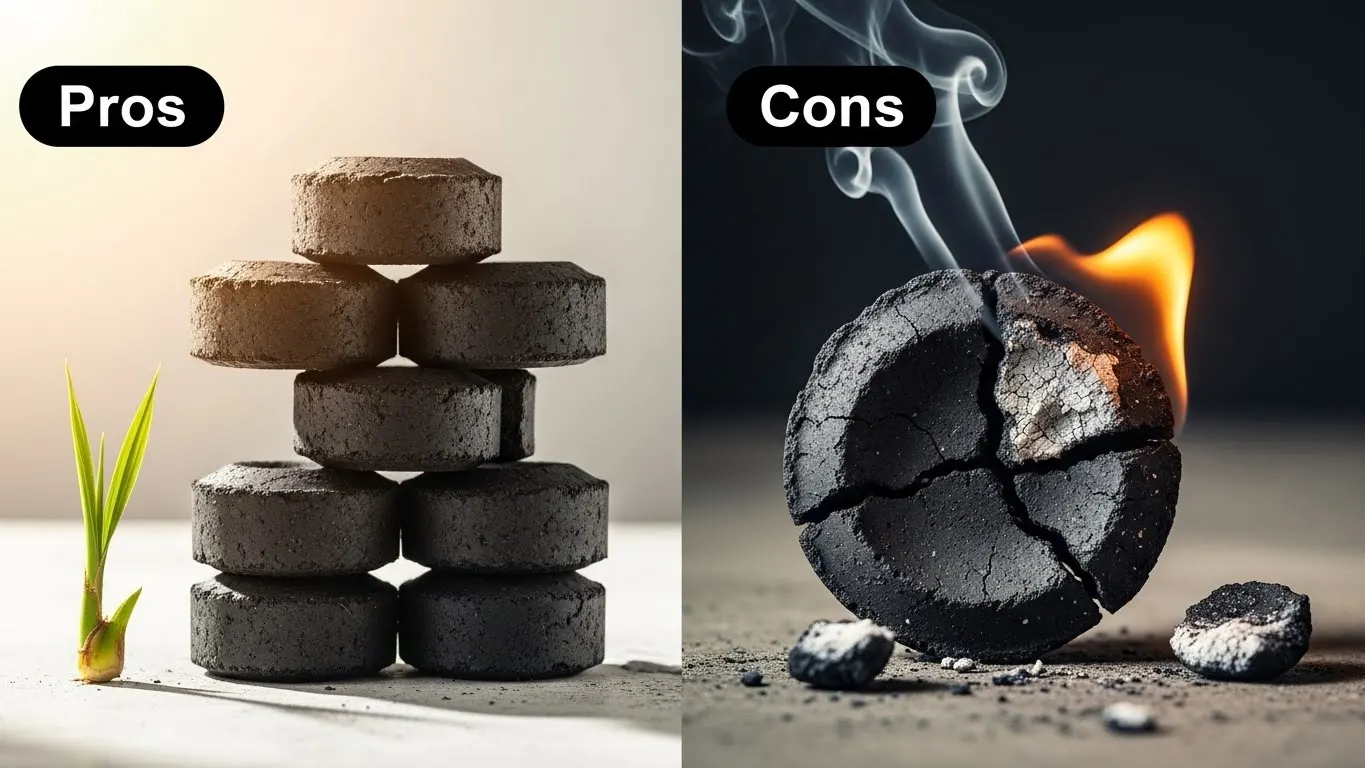
Coco Java coconut charcoal is available in both flat and cube shapes, each designed to provide long‑lasting, clean heat for hookah sessions with minimal ash and no added chemicals. Both formats are made from 100% natural coconut shells and are marketed as odorless and tasteless once fully lit.
Coconut Charcoal Pros and Cons: A Close Look at Coco Java
Coconut charcoal has become a premium choice for hookah users because it combines long burn time, stable heat output and relatively eco‑friendly production from agricultural waste. Coco Java is one of the well‑known brands in this segment, offering natural coconut hookah charcoal in 1 kg flats and 1 kg cubes specifically engineered for shisha.
Key product links for direct reference and see are:
– Coco Java Natural Coconut Hookah Charcoal Flats
– Coco Java Natural Coconut Hookah Charcoal Cubes
What Is Coconut Charcoal?
Coconut charcoal is produced by carbonizing coconut shells at high temperature and then compressing the resulting charcoal powder into briquettes using natural binders. Because coconut shells are dense and low in resin, the resulting briquettes tend to burn hotter and longer than many traditional wood charcoals while generating less smoke and ash.
Benefits of Coconut Charcoal (Including Coco Java)
Long burn time and stable heat
Coco Java flats and cubes are designed to burn significantly longer than many quick‑light coals, with vendor descriptions indicating up to about 60–90 minutes of usable heat under typical conditions. This extended burn time reduces how often coals need to be changed during a hookah session and supports more consistent smoke production.
Low ash, odorless and tasteless
Product listings emphasize that Coco Java coals are odorless and tasteless once fully lit and leave less than a few percent of their weight as ash. This low‑ash, neutral‑flavor profile helps preserve the original taste of the shisha and keeps heat management devices and bowls cleaner.
Natural and eco‑friendlier raw material
Coconut charcoal uses discarded coconut shells as a raw material, turning an agricultural by‑product into a fuel source instead of relying on cutting hardwood trees. Many suppliers highlight features such as high calorific value, low moisture content and long burning time as part of the environmental and performance advantages of coconut‑shell briquettes.
Drawbacks and Limitations
Higher price point
Compared with some generic wood charcoals and low‑grade briquettes, branded coconut charcoals such as Coco Java usually sit in a higher price tier due to production, quality control and packaging costs. For lounges and frequent users, the longer burn and reduced coal changes can partially offset this cost, but budget‑conscious casual users may still find traditional options cheaper upfront.[6][5]
Lighting requirements and non‑instant nature
Coco Java is explicitly marketed as “NOT INSTANT LIGHT CHARCOAL,” meaning it requires a proper hookah charcoal burner or strong gas flame and cannot be ignited with a simple match. Users must allow enough time for every side of the cube or flat to become fully glowing; otherwise, incomplete ignition can cause extra smoke and reduced heat.
Coco Java Flats vs Cubes
Shape, count and use case
The Coco Java 1 kg flats box typically contains 108 flat pieces, while the 1 kg cubes box contains around 72 cubic pieces with dimensions close to 25 mm per side. Flats are often preferred for more delicate heat management or smaller bowls, whereas cubes deliver a larger mass of charcoal per piece and are popular for longer, hotter sessions or use with heat management devices.[2][1]
Performance characteristics
Both formats advertise similar core properties—100% natural coconut shell, long burning time, odorless and tasteless performance—so choice mainly comes down to how precisely the user wants to control heat and how their bowl or HMD is designed. For example, three 25 mm cubes can be ideal in many modern HMDs, while flats can offer finer adjustment for traditional foil setups.[5][3][1][2]
Comparison Table: Coconut vs Wood and Quick‑Light Charcoal
| Feature | Coco Java Coconut Charcoal | Generic Wood Charcoal | Quick‑Light Charcoal Tablets |
|---|---|---|---|
| Raw material | 100% coconut shell briquettes | Mixed hardwood or softwood | Pressed charcoal with oxidizers |
| Burn time | Long; up to about 60–90 min | Often moderate and uneven | Shorter; optimized for fast sessions |
| Ash production | Low ash (<3% stated in listings) | Medium to high | Often higher, more residue |
| Flavor/odor when lit | Odorless and tasteless after full ignition | Can impart woody smoke | May add chemical taste if not fully burned |
| Lighting method | Needs burner or strong flame; not instant light | Can be lit on grill or open flame | Very easy to light with lighter or match |
| Environmental aspect | Uses agricultural waste (coconut shells) | Often involves tree cutting | Varies; often similar to wood briquettes |
Practical Tips for Using Coco Java Coals
Proper ignition
Place Coco Java flats or cubes on an electric hookah charcoal burner or strong gas flame and wait until each piece is fully glowing on all sides, with no dark patches remaining. Rotating the pieces during ignition improves even heating and helps achieve the advertised odorless, tasteless performance.
Heat management on the hookah
For foil setups, start with fewer pieces (for example, two flats or one to two cubes depending on bowl size) and adjust by adding or removing coals as needed. Using heat management devices with the 1 kg cubes can make it easier to maintain a stable temperature over a long session.

No comment